


Barnsley - Oakwell
- Jimmy Muir

- Dec 28, 2025
- 8 min read
Nestled in the heart of Barnsley, Oakwell is more than just a football ground—it is an enduring symbol of community pride, resilience, and passion. Since its inception in 1887, Oakwell has borne witness to the club’s highs and lows and has served as the soul of the town. From its unassuming beginnings on farmland to its evolution into a modern stadium, Oakwell’s history is intertwined with the lives of local supporters and the spirit of Barnsley. Among the many chapters in its history, the 1912 FA Cup victory stands out as a moment of sheer elation and collective triumph that still resonates in the memories of its people.
Origins of Oakwell (1887–1900)
Oakwell’s story begins in 1887, when Barnsley St. Peter’s moved to the area that would lend its name to the future stadium. Originally a field fringed with oak trees, the ground’s name—Oakwell—reflected not only the natural landscape but also the sturdy, deep-rooted character of the local community. In those early days, the venue was nothing more than a patch of open land with a modest arrangement of benches and a wooden stand. Football was a welcome respite for the local populace, many of whom laboured in the coal mines and glassworks that powered Barnsley’s industrial boom. The sport provided hope and unity, and Oakwell quickly became the communal theatre where dreams were nurtured and local heroes were born.
The simplicity of Oakwell’s early setup is a poignant reminder of how far Barnsley FC has come. There were no grandiose facilities or floodlit spectacles—just raw, honest passion for the game. These humble beginnings laid the foundation for what Oakwell would eventually become: a fortress that not only hosted matches but also symbolized the resilience and hard work of a tight-knit community.
Growth and Development in the Early Years (1900–1910)
As Barnsley FC began to establish itself, the early 20th century marked a period of rapid transformation at Oakwell. When Barnsley was admitted to the Football League in 1898, the club’s rising profile necessitated improvements to the ground. Progress came gradually: simple yet vital upgrades were made as the popularity of the sport soared. The introduction of covered terraces and a basic grandstand provided a more comfortable and secure viewing experience for the ever-growing crowd of ardent supporters.
During this period, Oakwell was infused with an air of determination and grit. Its relatively close quarters created an intimidating atmosphere for opposing teams—a cauldron of noise and fervor fueled by working-class pride. The incremental improvements were more than just structural; they were emblematic of Barnsley’s emerging identity as a force to be reckoned with on the pitch.
The Glorious Chapter: 1912 FA Cup Victory
Perhaps no event in Oakwell’s history is as celebrated or as symbolic as the 1912 FA Cup victory. That cup run remains etched in the hearts of all who have long cherished Barnsley FC. The journey to the trophy was fraught with challenges. The club had to endure a series of hard-fought matches, with memorable victories against established teams like Birmingham, Bolton, and even an unexpected triumph over Swindon in a gripping encounter.
The final itself was a tale of nerve and determination. Facing West Bromwich Albion, Barnsley managed a hard-earned 0-0 draw in the initial match, forcing a replay—a situation that would test the mettle of both the team and its supporters. The replay, held at Bramall Lane, proved to be a decisive battle. In extra time, a moment of brilliance from forward Harry Tufnell changed the course of history as his goal broke the deadlock, ensuring a 1-0 victory. The goal was not just a strike on the pitch, but a spark that ignited a celebration throughout Barnsley.
In the aftermath of the victory, the streets of Barnsley echoed with cheers and celebratory parades. Oakwell, the venue that had borne the weight of hope and struggle, transformed into a shrine of local pride. The triumph was symbolic—a testament to the spirit of a community that found unity in football and belief in the impossible. The 1912 FA Cup win was a moment when the modest yet determined nature of Barnsley’s identity was recognized on the national stage, forever linking Oakwell with a legacy of glory.
Interwar Years and Continued Expansion (1912–1939)
The period following the 1912 success was one of both consolidation and modest ambition. The club and its ground continued to evolve against the backdrop of a rapidly changing Britain. The interwar years saw Oakwell gradually expand its facilities. It was during this time that the stadium began to host larger crowds, with the addition of new covered stands reflecting an increase in local interest and attendance. The ground’s capacity swelled as Oakwell became a central gathering place for fans looking to witness their team’s exploits.
The expansion was not merely physical but also cultural. Oakwell maintained its reputation as a fiercely intimidating venue—its atmosphere, filled with chants, songs, and the resolute determination of Barnsley’s supporters, made it a difficult venue for visiting clubs. This period embedded Oakwell even deeper into the fabric of the community. It was a place where generations of fans forged bonds over shared experiences, where memories of hard-fought victories and bitter losses were passed down like treasured family heirlooms.
Wartime Challenges and Post-War Resurgence (1939–1960)
With the onset of World War II, football and the very heartbeat of Oakwell were affected. The stadium, like so many other community sites, was repurposed or left idle as national priorities shifted toward the war effort. However, the war years also underscored the resilience of the local people. When peace finally returned, the post-war period saw a remarkable resurgence in both attendance and spirit.
Oakwell played a pivotal role during this revival. In 1949, the ground recorded its all-time high attendance when 40,255 supporters gathered to watch an FA Cup match against Stoke City—a poignant reminder of the unbridled passion harbored within its stands. The post-war era brought with it crucial infrastructural upgrades; the introduction of floodlights in the 1950s not only modernised the ground but also allowed for evening matches, further cementing Oakwell’s reputation as a beacon of Barnsley football.
The transformation during these years was bittersweet: the scars and austerity of wartime were evident, yet they also imbued Oakwell with a sense of grit and renewal that mirrored the spirit of the community emerging from hardship.
The Modernisation Era: From the 1960s to the 1980s
The decades that followed saw Oakwell entering a period of modernisation, even as Barnsley FC navigated the tumultuous waters of fluctuating league fortunes. Throughout the 1960s and 1970s, Oakwell remained a treasured ground despite some inevitable decline in its physical condition. Wooden stands weathered time and the lack of modern facilities became apparent. Yet, the intrinsic charm of Oakwell—its raw, unvarnished atmosphere and the unwavering loyalty of its fans—ensured that it retained a special place in the hearts of the local populace.
The 1970s witnessed several memorable matches, as Barnsley strove for promotion amid stiff competition. Even as the stadium’s infrastructure began to show signs of neglect, its atmosphere flourished. The ground’s continued use and the passion of its supporters made it a unique and irreplaceable venue. This era was a testament to the adage that a football ground is defined more by the spirit within its walls than by the modernity of its structure.
A New Chapter in the 1990s: Premier League Aspirations and Redevelopment
The late 1990s heralded a transformative period for both Barnsley FC and Oakwell. In the 1997–98 season, the club achieved a monumental milestone by reaching the Premier League, a feat that brought renewed national attention to Oakwell. With this success came an urgent need to reconcile the historical charm of the ground with the stringent modern standards of top-flight football.
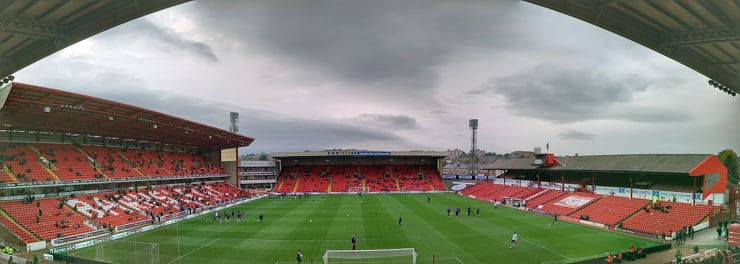
The resulting redevelopment project was comprehensive. The aging stands were replaced with modern, all-seater alternatives, and significant improvements were made to safety, comfort, and accessibility. The West Stand and East Stand received substantial upgrades that not only reduced the overall capacity to around 23,000 but also improved the spectator experience dramatically. Such changes ensured that Oakwell could safely and effectively host high-profile matches, including those in the Premier League, even if Barnsley’s stay at that level proved fleeting.
Beyond just the physical improvements, the redevelopment of Oakwell symbolised a meeting point between tradition and modernity. The familiar red-brick facades and exposed steel elements were retained as nods to its storied past, while the new facilities spoke of an ambition to compete on the modern stage. This delicate balance of preservation and progress ensured that Oakwell remained a beacon of community heritage while embracing the future.
21st Century Oakwell: Legacy, Challenges, and Community Spirit
Entering the 21st century, Oakwell continued to serve as an emblem of Barnsley’s heritage. Despite facing financial challenges that occasionally slowed development, the ground has continued to be a centre for not only football but also broader community engagement. In recent years, Oakwell has been a venue for international fixtures, including England U21 matches and women’s internationals, reinforcing its status as a respected sporting facility.
Additional investments, such as the installation of modern scoreboards, enhanced hospitality suites, and community-oriented facilities, have further cemented Oakwell’s role as a multipurpose venue. The creation of the Oakwell Community Sports College is particularly notable, as it represents a commitment to nurturing youth and reinforcing sports development within the region. Through these efforts, the ground has maintained its dual identity as both a historic monument and a dynamic centre for contemporary sport.
Recent years have also seen moments of renewed excitement on the pitch—for instance, memorable playoff victories and hard-fought campaigns in League One and the Championship have once again reminded fans of the magic that Oakwell is capable of generating. Even as Barnsley FC navigates the challenges of modern football administration, Oakwell’s enduring atmosphere keeps the legacy of the club alive for both long-time supporters and new generations.

Oakwell’s Enduring Legacy and Cultural Importance
What truly sets Oakwell apart is not only its physical transformation over the decades but also its position as an eternal repository of local memory. Every brick, every seat, and every corner of the ground tells a story. From the humble beginnings of 1887 to the jubilant celebrations of 1912, and through eras of expansion, wartime adversity, modernisation, and redevelopment—the history of Oakwell is inseparable from the history of Barnsley itself.
The 1912 FA Cup victory, in particular, stands as a timeless reminder of what can be achieved when a community comes together in pursuit of a common dream. That moment of triumph, immortalised by Harry Tufnell’s decisive goal in the replay against West Bromwich Albion, transcended the boundaries of sport. It offered hope and a sense of dignity at a time when the town needed it most, galvanising the spirit of its people and creating a legacy that would endure for generations.
Oakwell’s distinctive character is deeply interwoven with the identity of Barnsley—a reflection of a community that prizes hard work, loyalty, and pride above all. The ground continues to foster a sense of belonging and is a living monument to the trials and triumphs of its people. Each matchday reinforces a unique culture born from decades of shared struggle, celebration, and the simple joy of supporting a local team.
Conclusion: Oakwell as a Living Legacy
More than a century after its humble origins, Oakwell remains a vital symbol of Barnsley FC’s proud heritage. Its evolution from a patch of farmland to a modern stadium encapsulates not only the journey of a football club but also the evolution of an entire community. Through periods of intense glory, like the unforgettable 1912 FA Cup victory, as well as the challenges of war, economic hardship, and modern redevelopment, Oakwell has never lost sight of its essence. It stands today as a touchstone of local identity and passion, a place where history and modern aspirations converge.
For the people of Barnsley, Oakwell is a reminder of where they have come from and a beacon of hope for the future. Its storied past continues to inspire, ensuring that every new generation of supporters understands that the spirit of 1912—and indeed of every milestone in Oakwell’s long history—lives on with every cheer, every challenge, and every match played on that hallowed turf.


Comments