


Doncaster Rovers – Lakeside Stadium
- Jimmy Muir

- Jan 30
- 9 min read
Doncaster Rovers occupy a distinctive place in the patchwork of English football: a club born in the Victorian era which, across more than a century, has been reshaped by industrial change, spectacular highs and lows on the pitch, and a slow architectural evolution from improvised fields to a modern, multi-purpose stadium at Lakeside. The story of the club’s grounds and stadiums is inseparable from the story of Doncaster itself—its railway works, its mining communities and, more recently, the municipal and private investment that produced the Lakeside sports complex and the stadium that most fans know today by the Keepmoat name and, more recently, as the Eco-Power Stadium. The club’s origins and its early places to play were modest: formed in 1879 by Albert Jenkins and a group of workmates from the Great Northern Railway workshops, Doncaster Rovers drew their first matches on public spaces around the town before finding a more permanent home in the mid-1880s. The team turned professional in 1885 and settled at what became known as the Intake Ground, a basic but serviceable venue that hosted the club through its first spells in the Football League at the beginning of the 20th century. The Intake Ground would serve Rovers until the club’s liquidation at the outbreak of the First World War; after the war the club re-formed and briefly ground-shared on a field at Bennetthorpe while new arrangements were secured. These early locations—Town Moor and racecourse fields, the Deaf and Dumb ground/Intake Ground and then Bennetthorpe—were typical of working-class clubs of the period: functional, often vulnerable to the elements and to the instability of rents, yet fiercely loved by local supporters.
The interwar years provided the first long-term chapter for Doncaster’s supporters: in 1922 the club moved to Belle Vue (often called “Old Belle Vue” by fans), a site on Bawtry Road that would be home to the Rovers for the best part of 85 years. Built incrementally as finances allowed, Belle Vue’s capacity rose and fell with the club’s fortunes; at its peak the ground could hold tens of thousands and in the late 1940s hosted one of the club’s record attendances, a crowd reported at more than 37,000 for the 0–0 against Hull City in 1948—an era when terraces and informal entry meant attendance figures were not always exact, but which nevertheless underline the scale of local support in those decades. The Main Stand at Belle Vue included elements transplanted from earlier structures and, like many older grounds, the stadium’s fabric tells a story of piecemeal growth: wooden stands, terracing, and gradual improvements for comfort and access over time. Belle Vue saw some of the club’s greatest on-field moments and simmering crises off it—periods of high attendance and pride alternated with years when mining subsidence, fires and financial problems curtailed capacity, and, in a notorious episode in the mid-1990s, arson and off-field scandal inflicted damage and distraction on the club and stadium. By the early 2000s the ground’s capacity and facilities were proving inadequate for modern expectations—safety regulations, accessibility and the broader ambitions of town-level regeneration all pointed towards the need for a new venue.

The decision to replace Belle Vue came after years of debate about how best to secure the club’s future. Planning permission and funding arrangements led to construction of a new, all-seater community stadium at Lakeside as part of a wider sports complex. The stadium was designed to be multi-purpose—capable of hosting football, rugby league, athletics and community events—and to anchor regeneration on Doncaster’s Lakeside corridor. Construction began in the mid-2000s and the new ground opened for the 2006–07 season. Doncaster Rovers played their first match at the new stadium on 1 January 2007, beating Huddersfield Town 3–0; the facility’s official opening took place later that summer, with a higher-profile friendly that brought a Manchester United XI to Doncaster. The new stadium increased seated capacity to roughly 15,200—around five thousand more than Belle Vue at the time of its closure—and was delivered as a public-private project in which Keepmoat Homes originally secured the stadium naming rights. The broader Lakeside Sports Complex, of which the stadium forms the centrepiece, cost in the tens of millions to complete and included a secondary “mini-stadium” with a running track and smaller stand for athletics and reserve fixtures. The club later secured long-term control of the stadium’s operations through a lengthy lease from the local authority, enabling it to plan and invest more directly in the venue’s matchday offer and community programming.
The stadium that stands at Lakeside—known during most of its life as the Keepmoat Stadium and rebranded as the Eco-Power Stadium from late 2021—was intentionally built as a modern, compact bowl with four single-tier stands encircling the pitch. The facility’s synthetic-reinforced natural turf (a Desso GrassMaster surface) and contemporary spectator facilities were intended to raise standards for fans and to widen the stadium’s commercial life: concerts, rugby league semi-finals, women’s football finals and international under-21 fixtures, as well as occasional temporary ground-shares, have all been part of the Lakeside era. Arguably some of the stadium’s defining early moments were not domestic league matches but showcase events: it staged an England under-21 international in 2010 and played host to games in the 2021 Rugby League World Cup, underscoring the venue’s regional importance beyond the immediate needs of the Rovers. The stadium also hosted the final of the FA Women’s Cup in 2013 and several high-profile rugby league ties, including Challenge Cup semi-finals—events that helped put Doncaster on the national sporting map in new ways. The record crowd at the Lakeside venue was set at 15,001 for a home fixture against Leeds United in April 2008—an early sign that the move had both increased capacity and drawn larger visiting followings for marquee fixtures.

On the pitch, Doncaster Rovers’ honours and roller-coaster league history are woven into the story of the club’s grounds: early election to the Football League, relegations and readmissions, and later promotions and cup successes all took place under the shadow of evolving stadia. The club was first elected to the Football League in 1901, a short-lived status at that time because of re-elections and temporary exits from the League, before being re-admitted for good in 1923 following a period back in the Midland League. From the 1930s onward Doncaster experienced success in the lower divisions—championships in the northern section of the Third Division and multiple titles at the fourth-tier level across the decades—while the early 21st century brought some of the club’s most celebrated modern achievements: a Football League Trophy victory in 2007, the League One play-off triumph at Wembley in 2008 that returned Doncaster to the second tier after a fifty-year absence, and later success in 2012–13 when the club again finished top of the third tier. More recently the club regained the fourth-tier title in the 2024–25 campaign—an achievement that both capped a period of on-field rebuilding and offered fresh optimism about sustainable progress. These trophies and promotions have been milestones for supporters, often marking the end of difficult spells and providing collective memory that ties the team’s identity to its home stadiums—from the terraces of Belle Vue to the all-seated bowl at Lakeside.
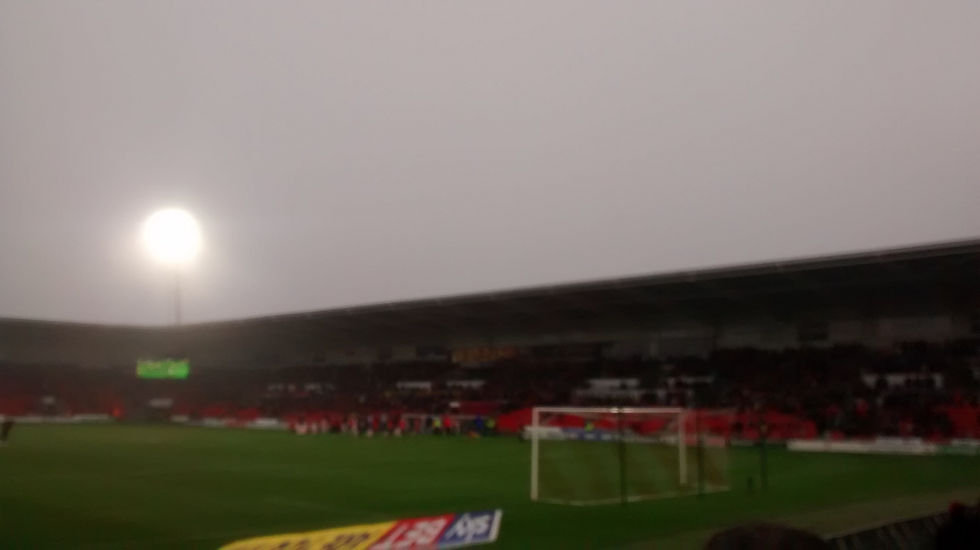
The Lakeside stadium’s transformation since opening has not been purely architectural; it has also involved the club’s relationship with the stadium as a business and community asset. Naming rights have been a visible sign of that commercial era: Keepmoat Homes sponsored the ground through its first 15 years, and Eco-Power later took over the naming rights in a new agreement starting in late 2021. The club’s 99-year operating lease, agreed with Doncaster Metropolitan Borough Council in 2012, gave Doncaster Rovers effective long-term stewardship of the venue—an arrangement intended to facilitate investment in matchday experience, community programmes and commercial development across non-match days. The Lakeside complex has been pitched as part of Doncaster’s regeneration agenda: alongside the stadium sit community sports facilities, training areas and the mini-stadium used by athletics and reserve teams, creating a multi-layered sporting campus rather than a single-purpose arena. The ground has also won plaudits for aspects of its operation—winning an award for matchday experience in 2010—suggesting that the new era delivered more than just extra seats.
No stadium survives for long without change and, since its opening, the Lakeside venue has undergone incremental improvements and occasional repairs driven by wear and by a remarkably busy calendar of events: regular football and rugby league fixtures, community events, concerts and one-off large gatherings quickly test the infrastructure. The club has undertaken routine seasonal renovations—pitch work, upgrades to public address systems and improvements to safety and accessibility—and local reporting in recent seasons highlights continued investment in the stadium’s fabric (for example, upgrades to the tannoy system and other essential maintenance works). The stewardship model under the club’s long lease suggests a preference for steady, targeted upgrades rather than wholesale redevelopment; however, the stadium’s naming deals and the club’s commercial strategy have also provided capital for targeted enhancements aimed at improving the fan experience and widening the stadium’s use beyond matchdays. As of the latest publicly reported plans there has been no confirmed, large-scale expansion to take the stadium’s capacity far beyond its current 15,231 seats—rather, the emphasis has been on quality improvements, safety, and ensuring the stadium can accommodate diverse events while meeting the regulatory standards of the EFL and other governing bodies. If the club’s ambitions for sustained success at higher levels were to be realised, the question of further redevelopment—whether to enlarge capacity, expand hospitality and corporate facilities, or reconfigure circulation and transport access—could return to the fore; for now, public sources show a focus on operational upgrades and community use backed by the long lease and commercial partnerships.
The Lakeside era has also been a story of shared use and partnership. The stadium was conceived to accommodate rugby league as well as association football, and Doncaster RLFC and other sporting tenants have used the ground, bringing different codes and their audiences to the same site. The Doncaster Rovers Belles (the town’s historic women’s side) have also used the stadium, notably hosting cup finals there. These shared uses have helped the venue remain active outside the men’s first-team calendar and have strengthened the stadium’s role as a civic asset. International youth fixtures and Rugby League World Cup games have underlined Lakeside’s suitability for higher-profile events, and the presence of a compact, modern bowl has allowed Doncaster to attract fixtures that older, more fragmentary stadia would struggle to host. The approach has not been without tension—balancing the competing needs of different sports for pitch quality and scheduling has sometimes required compromises—but on the whole the multi-use model has made the stadium more resilient financially and culturally than a single-use football ground might have been.
Looking back over a century and more, the tale of Doncaster Rovers and their grounds is less a straight progression than a series of cycles: makeshift beginnings at public fields; the long, intimate relationship with Belle Vue, with its terraced crowds and historic highs and lows; a decisive break in the 2000s that embraced a modern, multi-use sports complex at Lakeside; and a continuing period in which the club has tried to knit community ambitions, commercial partnerships and footballing aspiration into a sustainable model. The club’s honours—early titles in the regional Midland leagues, multiple third- and fourth-tier championships, the Football League Trophy in 2007 and the dramatic League One play-off victory at Wembley in 2008—remain landmarks not just of sporting success but of identity; they are the moments supporters point to when they recall nights at Belle Vue or the first full houses at the new stadium. Those on-field triumphs and the off-field choices about where and how to play are mutually reinforcing: a modern stadium can help a club grow commercially and attract talent, while memorable results and cup runs fill stands and justify investment.
For supporters who remember the terraces of Belle Vue the Lakeside bowl is a different kind of home: cleaner lines, better sightlines, improved accessibility and corporate facilities—yet it also carries the same local stories, the same songs and the same sense of belonging. The Lakeside site itself—the stadium and its surrounding facilities—remains a hub for sporting life in Doncaster, used for community programmes, local athletics and regional fixtures that put the town on national sporting maps. Future changes are likely to be evolutionary rather than revolutionary: continued piecemeal improvements to acoustics and public address systems, pitch maintenance, hospitality and accessibility have been evident in club and local reporting; larger redevelopment would require new funding and a clear business case tied to long-term sporting ambitions. Meanwhile the club’s long lease and commercial partnerships give it the tools to manage the stadium as a civic asset able to host everything from women’s cup finals to under-21 internationals and rugby league fixtures—events that, together with domestic league matches, build the modern narrative of Doncaster’s stadium life.
In the end, the stadium at Lakeside is both a product and a projector of Doncaster Rovers’ identity: built as part of a regeneration vision, animated by a century of supporters’ loyalty that stretches back through Belle Vue to the intake fields of the 19th century, and constantly negotiated as the club seeks to balance ambition with sustainability. The terraces and terraces’ echoes may have gone, but the crowds still come; the record gates at Belle Vue and the early big attendances at the new Lakeside ground are chapters in the same story of a town and its team. As Doncaster Rovers look ahead, the practical question is not whether they will change their stadium again but how they will use the Lakeside asset to build a stable future—on the pitch, in the town and in the wider landscape of English lower-league football.


Comments