


Furness Rovers – Wilkie Road
- Jimmy Muir

- Oct 12, 2025
- 5 min read
On 9th March 2024, I had made the visit to Cumbria, staying at the Travelodge adjacent to Barrow AFC’s Holker Street Ground. Little did I know as I attended Barrow’s match with Colchester United that I would be treated to two football matches that day.
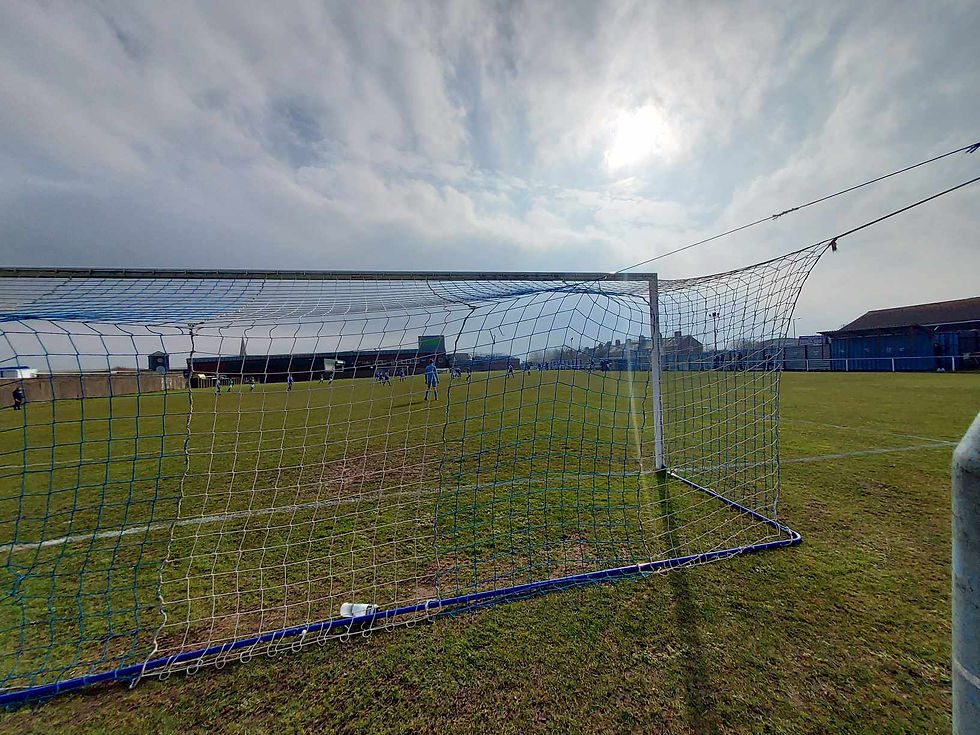
Adjoining Holker Street is Wilkie Road, home of the Furness Premier League club, Furness Rovers, who were hosting, and lost 2-0 to Holker Old Boys. Their match had kicked-off at 2:00 PM- an hour prior to Barrow kicking their fixture with the U’s.
As you can see from the images that Wilkie Road is a ground very much open to the elements with supporters standing on the edge of the pitch. The facilities are basic but for any purist ‘Groundhopper’ this ground is a must to be ticked off their ‘been to’ list.


Potted history of Furness Rovers
Furness Rovers is a community-rooted football club from Barrow-in-Furness whose modern identity grew from the local junior and amateur scene into an established senior side in the Furness area. While Barrow-in-Furness has a long and well-documented senior football tradition centred on Barrow A.F.C., Furness Rovers occupies the important local tier beneath that — developing youth players, sustaining Saturday and Sunday men’s football, and providing a focal point for grassroots sport in the town. The club’s official presence online and local records show that the name Furness Rovers has been used in the 21st century for a club based at Wilkie Road close to Holker Street, operating multiple senior and junior teams and affiliated to the Lancashire FA.
Like many community clubs, Furness Rovers’ identity is a product of local reorganisations, name-changes and league migrations that are typical of English amateur football. Local historical league tables record that the modern incarnation was previously known as Barrow Rangers before switching to the Furness Rovers name in 2003; following that rebrand the club entered the West Lancashire League, achieving promotion from Division Two to Division One at the end of the 2003–04 season. Over the next two decades Furness Rovers experienced the usual fluctuations — relegations, promotions and periods outside that league — before settling into local competitions such as the Furness Premier League and the Barrow & District leagues that best fit their playing base and resources.

The club’s focus has always been as much on player development and community involvement as on silverware. Furness Rovers runs an extensive junior section (under-age teams from very young ages through to youth levels) and places emphasis on volunteering, coaching accreditation and local partnerships. Their website and social feeds frequently advertise volunteer opportunities, lotto fundraising, and junior fixtures — hallmarks of a club whose sustainability depends on grassroots engagement rather than commercial revenue. This community emphasis has made Furness Rovers an important stepping stone for local players who either move into Barrow A.F.C.’s youth ranks or continue in non-league senior football across Cumbria and Lancashire.
On the pitch, Furness Rovers’ competitive record in the early 2000s shows a club punching above its weight at times. After rebranding in 2003, promotion to West Lancashire League Division One followed; there have been seasons of relegation and recovery (relegated in 2009 and again in 2014 according to historic league records), illustrating the fragile balancing act small clubs face between ambition and resources. By 2022 Furness Rovers had left the West Lancashire League to focus on more local competitions — a pragmatic choice that echoes the club’s community priorities and the realities of travel costs and player availability for grassroots sides.
The club’s home since the modern Furness Rovers era has been Wilkie Road, a modest ground tucked close to Barrow’s principal stadium, Holker Street. Wilkie Road’s proximity to Holker Street is frequently remarked on by visiting observers: the two grounds sit within a short walk of one another, creating a compact footballing quarter in that part of town. The Wilkie Road facility is a classic small-club set-up — a neatly tended pitch, modest changing rooms, basic spectator facilities and often a clubhouse or adjacent social space that anchors matchday activity. Such amenities are exactly what a volunteer-driven club needs: functional, community-facing, and scalable for junior and senior fixtures alike.
Wilkie Road’s evolution has been incremental rather than grand. Unlike larger stadia with major investment cycles, Furness Rovers’ ground improvements have tended to be small, piecemeal projects delivered as funding and volunteer time permitted: pitch maintenance and drainage work to keep playing surfaces usable through the wet Cumbrian winters; basic improvements to changing-room comfort and security; and modest steps to improve spectator safety and accessibility. These practical upgrades are common for clubs surviving on grants, local fundraising (lotteries, social events) and the goodwill of volunteers. The club’s online notices and local press coverage emphasise fundraising drives and volunteer recruitment, indicating that community support remains the main engine behind facility improvements.
Wilkie Road’s location — a stone’s throw from Barrow A.F.C.’s Holker Street — also shapes the club’s relationship with the town’s footballing culture. Whereas Holker Street has been the borough’s senior stage since 1909 and has seen substantial historic development (notably the Brian Arrowsmith Stand and mid-20th century terracing), Wilkie Road fulfils the grassroots function of feeding and reflecting local interest. Fans and volunteers often move between the two clubs’ orbit: parents and junior players at Furness Rovers; spectators and staff at Barrow A.F.C. This proximity has practical advantages (shared local knowledge, ease of scouting and training links) and symbolic ones — it roots the town’s football ecosystem within a small geographic footprint.
Looking ahead, Furness Rovers’ future will likely continue to be shaped by the familiar dynamics of community football: securing reliable volunteer coaches, maintaining youth recruitment in the face of competing activities, and finding modest capital for ground improvements that enhance safety and comfort without overextending finances. The club’s decision to operate across junior and senior teams, to run community lotteries, and to advertise volunteer roles publicly suggests healthy organisational awareness of these realities. For towns like Barrow, clubs such as Furness Rovers are indispensable — they sustain participation, local identity and a lifelong attachment to the game that feeds both social cohesion and the talent pipeline for higher levels.
In summary, Furness Rovers is a resilient local club which, since adopting its modern identity in the early 2000s, has served Barrow-in-Furness as a hub for grassroots football. Its competitive record in the West Lancashire League, regular community initiatives, and steady ground development at Wilkie Road tell a story familiar across English grassroots football: modest facilities, volunteer energy, and a quiet determination to keep the game alive at a local level. While Holker Street will always be the town’s headline stadium, Wilkie Road and Furness Rovers provide the essential foundations — the coaches, young players, volunteers and weekend matches — that make Barrow’s football culture possible.


Comments