


Preston North End - Deepdale
- Jimmy Muir

- Dec 4, 2025
- 7 min read
Deepdale is one of the most famous football stadiums in the world, not only because of its long association with Preston North End but also because of its claim to be the oldest continually used football ground anywhere. Situated in Preston, Lancashire, Deepdale has been the home of the club since the late nineteenth century, and its story intertwines with the formation of the Football League itself. The ground has been the stage for triumphs, near misses, modernisation, and a long-standing sense of tradition that few stadiums can equal.
Preston North End Football Club was founded in 1880, although the sporting institution that preceded it had existed since 1863 as a cricket club. At first, football was introduced to the members as a winter pastime, a supplement to the summer game of cricket. The popularity of football grew quickly in the town and beyond, and within only a few years Preston North End had shifted its focus entirely towards the sport. They began attracting players from Scotland, at a time when professionalism in football was not yet legal in England. This led to the club being nicknamed the “Invincibles” for their dominance in the late 1880s, and Preston became one of the founding members of the Football League in 1888. Their name is forever inscribed in history because they won the very first Football League championship and did so unbeaten, while also completing the League and FA Cup double in the same season, 1888–89. In the context of world football, that achievement stands as one of the most remarkable feats of its age, a testament to both the club’s foresight and its ability to draw talent from across the British Isles.
When Preston North End began its footballing story, the club did not have to rely on a series of temporary homes before Deepdale was established as their permanent ground. Unlike many clubs of their generation who wandered between fields, public parks, and borrowed facilities, Preston settled quickly at Deepdale. The ground itself had been in use for sport since 1875, originally as a venue for cricket and rugby, and when Preston North End turned its attentions fully to football, Deepdale was converted into the team’s permanent base. This immediate grounding in a single location gave Preston a strong identity and a sense of permanence that helped them attract growing support.
The early development of Deepdale mirrored the rise of football as a professional sport. Initially the ground was a simple open field, with no stands and very few facilities for spectators. Crowds would gather along the touchlines, often jostling for position, and the atmosphere was raw and energetic. As football’s popularity exploded in the late nineteenth century, Preston North End recognised the need to develop their home into a proper stadium. Terracing was added, and rudimentary stands began to appear, giving the ground a more defined character. By the 1890s Deepdale had established itself as one of the key grounds in England, with crowds regularly numbering in the tens of thousands. The growing demand for spectator accommodation was directly tied to the club’s success. Preston were not only Football League champions in 1889 and 1890, but they also reached three consecutive FA Cup finals between 1888 and 1893, lifting the famous trophy twice. These triumphs meant Deepdale was drawing some of the biggest attendances in the country.
One of the most notable features of Deepdale in its early history was its pioneering approach to infrastructure. The club installed a covered stand in 1890, ensuring that a portion of the crowd could watch the game in some comfort, sheltered from the unpredictable Lancashire weather. Over the decades, the ground was gradually improved and expanded, with terracing built behind the goals and along the sides of the pitch. Floodlights were eventually installed in the mid-twentieth century, allowing evening matches to be played. By then, Deepdale had cemented itself not just as the home of Preston North End, but as one of English football’s most historically significant arenas.
Throughout the twentieth century, Deepdale became a ground with multiple iconic features. The Spion Kop, as it came to be known, was one of the most famous terraces in the Football League. Vast and steep, it could house tens of thousands of supporters in its heyday, creating a wall of noise and atmosphere that spurred on Preston during their greatest matches. Opposite the Kop stood the Pavilion Stand, which retained an old-world character long after many other grounds had adopted more modern steel and concrete designs. The Town End was another terrace that gave the ground its unmistakable character, packed tightly with supporters who brought colour and energy to every game.

The record attendance at Deepdale was set in April 1938, when 42,684 fans crammed into the ground to watch an FA Cup sixth round tie against Arsenal. This colossal crowd demonstrated not only the scale of interest in football in Preston at the time but also the capacity of Deepdale to host games of national importance. It was no coincidence that only weeks later, Preston went on to win the FA Cup, beating Huddersfield Town in the final at Wembley thanks to a last-minute penalty from George Mutch. That 1938 triumph remains the club’s most recent FA Cup success, but it was indelibly linked to the atmosphere and excitement generated at Deepdale during the run.
Deepdale has also hosted international football. In October 2005, the ground staged England Under-21 matches, including a European Championship play-off against France that drew significant attention. The decision to bring the national youth side to Deepdale was recognition of the stadium’s improved facilities and its continuing importance within English football. Earlier, Deepdale had hosted other representative games, further cementing its place as more than just the home of Preston North End but as a venue of wider footballing relevance.
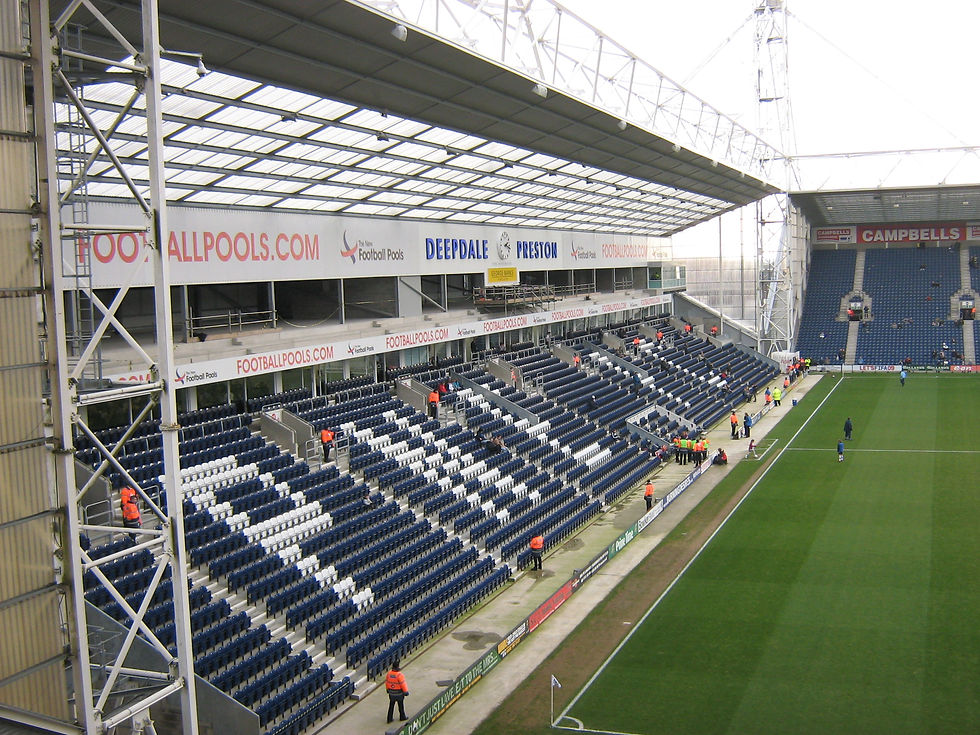
The transformation of Deepdale in the modern era is perhaps the most remarkable part of its story. By the 1990s, the ground, like many across England, was in need of major redevelopment. The tragic events at Hillsborough in 1989 had accelerated the move towards all-seater stadiums, and Preston North End, then climbing back through the Football League after years of struggle, made the decision to completely rebuild Deepdale stand by stand. Unlike some clubs that chose to leave their historic homes, Preston committed to staying at Deepdale, ensuring its legacy would continue into the twenty-first century. The redevelopment process began in 1995 with the demolition of the old Spion Kop, replaced by the modern Sir Tom Finney Stand, named in honour of the club’s most famous player. Sir Tom Finney, who played his entire career at Preston between 1946 and 1960, symbolised the heart and soul of the club, and naming the stand after him was a fitting tribute to his service and loyalty.

Following this, the Bill Shankly Kop was opened, commemorating another legendary footballing figure with deep ties to Preston. Shankly had been a player at North End before achieving fame as a manager at Liverpool, and his formative years at Deepdale were vital to his footballing education. The Town End and the Invincibles Pavilion were redeveloped in subsequent years, and by 2008 Deepdale had become an entirely modern all-seater stadium with a capacity of around 23,404. What makes this transformation unique is that it occurred without Preston ever leaving their ancestral home. The ground that had staged their first Football League matches in 1888 continued to be their home well into the twenty-first century, albeit in a completely different guise.
The club also embraced modernity by incorporating new facilities, including conference and hospitality areas, as well as the National Football Museum, which was housed at Deepdale from 2001 until 2010. The presence of the museum reinforced the ground’s place at the heart of football’s story, attracting visitors from across the world. Though the museum has since relocated to Manchester, its time at Deepdale remains a proud chapter in the ground’s history.
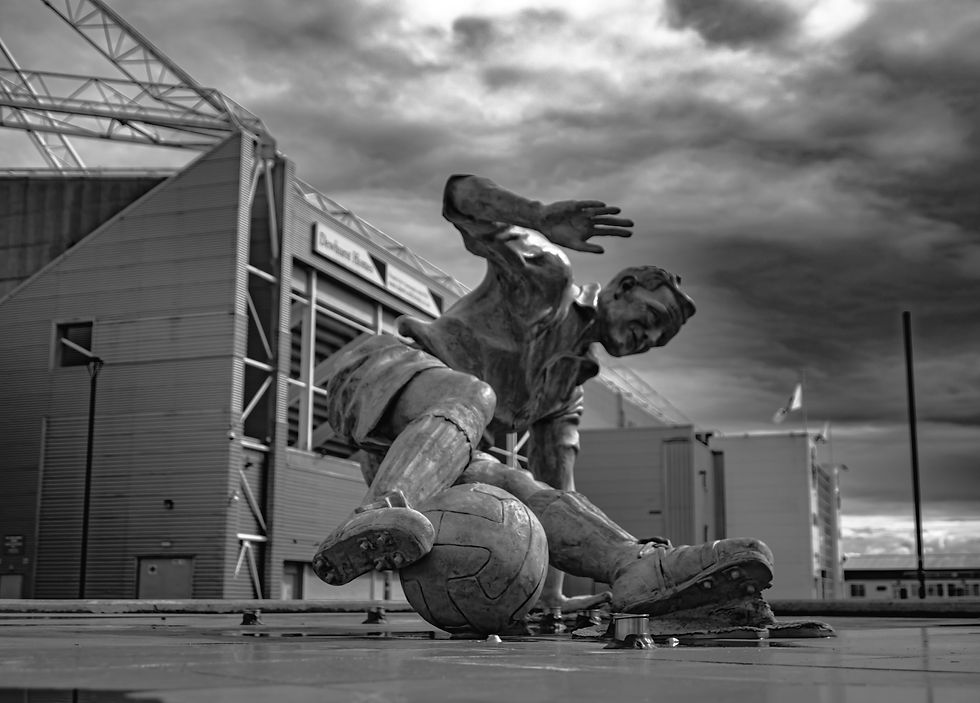
On the pitch, Preston North End’s fortunes have fluctuated across the decades. After their early dominance in the Football League, the club endured long spells without major silverware, though they consistently produced strong teams and remained a respected force. Their honours include two Football League championships, two FA Cup victories, and a long history of producing and nurturing top-class footballers. The presence of Sir Tom Finney is the crowning jewel of this legacy. Finney, widely regarded as one of the greatest players England has ever produced, made 433 league appearances for Preston, scoring 187 goals, and represented his country 76 times. His loyalty to the club, combined with his extraordinary talent, ensured that Deepdale was always a stage for brilliance during his era. Outside the stadium today stands a statue of Finney, known as “The Splash,” which depicts him dribbling through a puddle of water, a tribute to both his artistry and his enduring connection to Preston North End.
Deepdale’s modern era has seen the club stabilise in the Championship, the second tier of English football, with hopes of one day returning to the Premier League. The stadium is regularly praised for its atmosphere, its compact but modern design, and the way it retains a sense of history despite its redevelopment. Future plans for the ground have focused on enhancing supporter experience, improving hospitality and community facilities, and ensuring that Deepdale remains both financially sustainable and a fortress for Preston. While there has been speculation from time to time about possible expansions or further improvements, the guiding principle has always been to maintain Deepdale’s status as a historic yet modern home.
Beyond the physical transformations, Deepdale represents a connection across generations. It has been the site of unforgettable matches, from the triumphs of the 1880s and 1930s to promotion battles in more recent decades. It has witnessed international football, record-breaking crowds, and the careers of some of the game’s greats. Its longevity, surpassing almost every other football stadium in the world, ensures it will forever be synonymous with the very origins of the sport.
The history of Deepdale is therefore the history of Preston North End itself: a pioneering club that shaped the early days of the Football League, a ground that has adapted with the times while never surrendering its soul, and a fanbase that has remained loyal through triumph and disappointment alike. To walk into Deepdale today is to walk into the living history of football, where the ghosts of the Invincibles still linger, where the roar of 42,000 against Arsenal in 1938 can almost be heard, and where the statue of Sir Tom Finney reminds every visitor of the values of loyalty, skill, and humility that underpin not only Preston North End but the game itself. As the club continues its journey in pursuit of future successes, Deepdale remains the stage upon which those dreams are played out, a ground that has stood the test of time and will continue to do so for generations to come.


Comments