


Sheffield Wednesday – Hillsborough Stadium
- Jimmy Muir

- Mar 6
- 9 min read
Sheffield Wednesday are older than most of the game they helped to popularise. The club grew out of The Wednesday Cricket Club, whose members had Wednesday afternoons free from work, and on the evening of 4 September 1867 they met at the Adelphi Hotel in Sheffield to form a football team to keep themselves together and fit through the winter. From the beginning, Wednesday belonged to that first, experimental era of organised football in which rules, competitions and even the idea of a “home ground” were still settling into place. Their earliest matches were played around the city on whatever suitable open space could be found, and the club’s nomadic years left a trail of venues that now read like a map of Sheffield’s sporting prehistory: places such as Highfield, Myrtle Road, Sheaf House and even Bramall Lane, which in those days was used for a variety of sports long before it became synonymous with their neighbours. Those moves were not merely logistical; they reflect how football was becoming a weekly ritual that needed gates, turnstiles, changing rooms, and the ability to charge admission reliably.
Note that this article was written prior to the football club entering Administration.
By the late nineteenth century, Wednesday were strong enough, and football popular enough, to require something more permanent. The club turned professional in the 1880s and made Olive Grove their first proper, long-term football home, a ground that anchored them through a crucial period when crowds swelled and the sport’s national structure hardened into leagues and cup competitions. The competitive pathway that brought Sheffield Wednesday into the Football League ran through the Football Alliance, where they were prominent, and in 1892 they were elected into the Football League’s First Division. That entry mattered: it placed Wednesday among the country’s recognised elite at the moment the League was becoming the central spine of the English game. Within a few years they were collecting major honours, winning the FA Cup in 1896 and confirming that Sheffield’s football culture could compete with the great clubs of the Midlands and the North West.
Yet Olive Grove, for all its importance, had limits. The end of the 1890s was a time when clubs began to think in terms of capacity, engineering and future-proofing. Wednesday’s decisive move came in 1899, when they relocated from the cramped industrial landscape near the city centre to Owlerton, in the north-west of Sheffield, and began playing at what was then known as Owlerton Stadium. The shift was more than a change of address. It created the space for a stadium to expand in step with football’s popularity and with Wednesday’s own ambitions, and it helped forge the identity that would later be captured in the nickname “the Owls”. Hillsborough, as it came to be known, started life as a ground in development rather than a finished monument: terraces, stands and entrances evolving as money allowed and as the crowd demanded. One of the most evocative details of that transition is that elements of Wednesday’s old home were physically carried into the new era. The South Stand’s predecessor at Olive Grove was dismantled and moved, brick by brick, to Owlerton, and even the ground’s clock made the journey, linking the new stadium to the club’s nineteenth-century roots.

The stadium’s transformation across the first half of the twentieth century is inseparable from the wider story of British stadium design, in which football grounds became recognisable civic structures with grandstands, rooflines and signature facades. At Hillsborough, this development became especially clear in the years before the First World War, when the club invested in more substantial construction and brought in the influential architect Archibald Leitch. The modern South Stand, still the ground’s oldest surviving major structure, was built between 1913 and 1915 to Leitch’s design, combining seats with standing accommodation in a way that reflected Edwardian football’s class geography: the grander, seated experience for some; the packed, vocal terrace for many more. Around this period, the ground itself took on the name by which it is now universally known, becoming Hillsborough Stadium in the early 1910s as the surrounding district’s identity attached itself to the venue. The stadium that began as Owlerton was becoming Hillsborough in both name and meaning: a landmark, not just a pitch with banks.
As Wednesday grew into one of the country’s major clubs, Hillsborough became a place associated with scale. Their achievements during the first decades of the Football League era were formidable: four league titles (1902–03, 1903–04, 1928–29, 1929–30) and three FA Cups (1896, 1907, 1935) anchor their historical standing among England’s most decorated sides. Those honours were won across different generations, but Hillsborough served as the theatre in which league campaigns were sustained and reputations built. The stadium’s capacity and atmosphere made it suitable not only for Wednesday’s own big occasions but for football’s neutral showpieces as well, and over time it became one of the country’s regular venues for major cup ties.
The clearest single expression of Hillsborough’s pre-war scale is its record attendance. On 17 February 1934, an FA Cup fifth-round match against Manchester City drew 72,841 spectators, a figure that still stands as the ground’s highest recorded crowd. That number is not just a statistic; it is a window into an era when terraces could hold vast, compressed masses, and when the relationship between football and crowd management was far less sophisticated than it would later need to become. The match itself finished 2–2, but the real legacy is the way the crowd figure has been repeatedly invoked to illustrate what Hillsborough once represented: a regional magnet capable of pulling tens of thousands through the turnstiles for a cup tie.
Hillsborough’s importance widened beyond club football as international football began to travel around the country rather than being concentrated solely in London. Before Wembley became the established home of England’s biggest matches, Hillsborough hosted England internationals, including a British Home Championship match in 1920 that ended in a remarkable 5–4 scoreline. Over subsequent decades the stadium continued to feature in international planning, and its credentials were confirmed when it was selected as a venue for the 1966 FIFA World Cup. Hillsborough staged group matches and, most memorably, the quarter-final on 23 July 1966 in which West Germany defeated Uruguay 4–0, with the match played on a Saturday afternoon in Sheffield. When Euro 96 came to England, Hillsborough again found itself hosting tournament football, staging three group games, with Denmark’s group fixtures forming part of the stadium’s role in that summer’s festival of international football. These events helped cement Hillsborough as one of the country’s recognisable major venues, a stadium that could be trusted with national and international crowds.
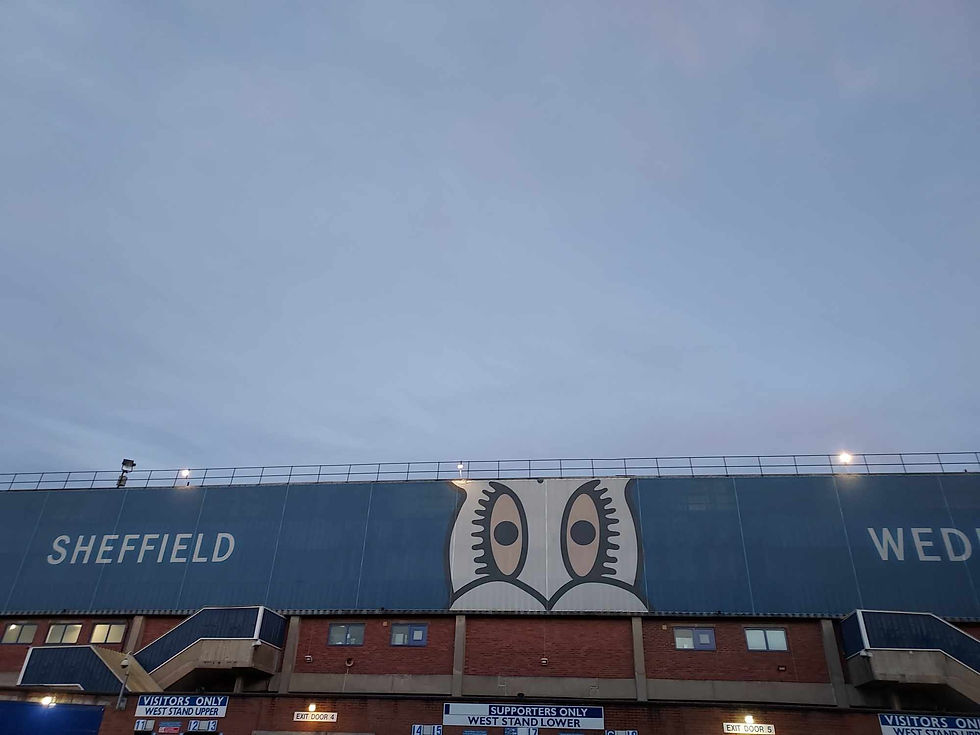
The stadium’s physical evolution after the Second World War reflected changing expectations of comfort, sightlines, and modern engineering. One of Hillsborough’s most famous architectural moments came in the early 1960s with the construction of the North Stand’s roof, often cited as pioneering in its cantilever design, allowing a covered stand without the obstructing pillars that had long impaired views in older grounds. That kind of innovation points to a stadium trying to modernise within an existing footprint, upgrading piece by piece rather than rebuilding from scratch. Hillsborough’s transformation has always been incremental, shaped by the realities of cost, by football’s shifting regulations, and by the push-and-pull between heritage and practical need.
For decades, Hillsborough was also one of English football’s most frequent neutral venues for FA Cup semi-finals, a status that brought prestige but also, ultimately, tragedy. On 15 April 1989, the stadium hosted the FA Cup semi-final between Liverpool and Nottingham Forest, and during the approach to kick-off a catastrophic crush developed in the Leppings Lane end. Ninety-seven people died as a result of injuries sustained that day, and hundreds more were injured, making it the deadliest disaster in British sporting history. The subsequent inquiries established that the primary cause was a failure of police crowd control and decision-making, and that aspects of the stadium’s management and infrastructure, including turnstile provision and the condition of crush barriers, contributed to the circumstances that made disaster possible. Hillsborough’s name became inseparable from grief, injustice, and the long campaign by families and survivors for truth and accountability. The disaster also accelerated a revolution in stadium safety across England, with the Taylor Report’s recommendations becoming the foundation for the move away from fenced standing terraces toward all-seater accommodation in the top divisions. Even decades later, Hillsborough remained the subject of official scrutiny and reporting; in December 2025, the Independent Office for Police Conduct concluded a long investigation into police conduct related to the disaster, underscoring how enduring and unresolved the trauma and institutional questions have been.
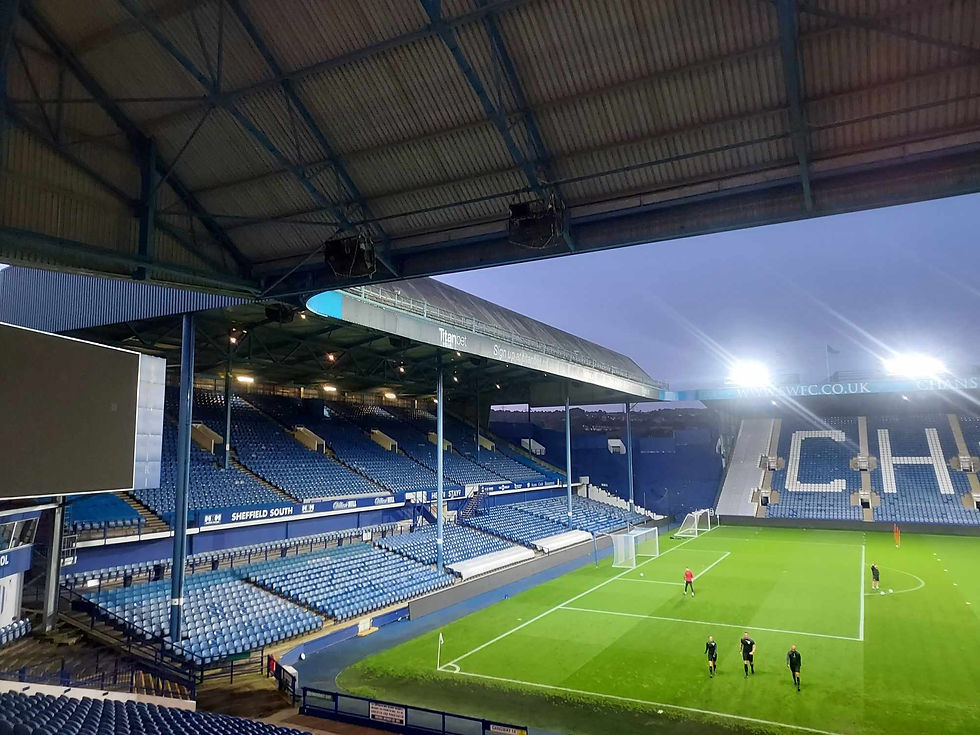
The post-1989 rebuilding of English football reshaped Hillsborough in profound ways. The stadium, like many others, had to reconfigure its terraces, remove perimeter fencing, and adapt to new safety certification regimes. By the early 1990s Hillsborough had been converted into an all-seater ground, and the capacity figures that had once reached into the seventies inevitably became a relic of the terrace era. This period of change also coincided with a modern high point for the club on the pitch. Sheffield Wednesday were prominent in the early Premier League years, reaching domestic cup finals and winning the League Cup in 1991, a notable feat because they achieved it as a second-tier club, beating Manchester United 1–0 and becoming the last side from outside the top flight to win one of England’s major trophies. Those successes helped keep Hillsborough in the national spotlight during a decade when football’s commercial transformation was accelerating.
Yet the same modern era that brought new money to the game also exposed the financial vulnerability of clubs outside the very top. Sheffield Wednesday’s later story includes recurring periods of financial strain, the kind that can be masked for a time by crowds and heritage but ultimately shows up in debt, restrictions and crisis management. In October 2025, the club’s difficulties reached a dramatic new phase when Sheffield Wednesday entered administration, with the owner stating that increased financial pressure had led to the decision to place both the club and the stadium company into administration. The English Football League confirmed a 12-point deduction as a consequence, underlining how deeply financial governance now intersects with competitive outcomes. Administration also re-cast Hillsborough itself as an asset under scrutiny rather than simply a home, because the stadium’s future, maintenance and potential redevelopment became tied to the priorities of administrators and any prospective new ownership.
Stadiums age whether or not clubs can afford to renew them, and Hillsborough’s recent history has been shaped by the increasing cost of keeping an old ground compliant with modern standards. In July 2025, Sheffield City Council issued a prohibition notice in respect of the North Stand as part of its role as the certifying authority for the stadium’s safety certificate, a major intervention that highlighted structural and safety concerns and immediately affected how the ground could be used. The closure of a major stand is not just an operational headache; it has financial consequences that ripple through matchday income, season ticket arrangements, and the club’s ability to plan improvements. When such problems intersect with broader financial crisis, the stadium’s maintenance can become both a symbol and a driver of instability, because the cost of repairs competes with the basic expenses of running a football club.
As for fires, Hillsborough’s story sits in the wider context of British stadium safety, where the Bradford City fire of 1985 and the Hillsborough disaster of 1989 together pushed fire safety, evacuation planning and ground certification into the centre of football governance. While Hillsborough is defined above all by the 1989 tragedy, the modern ground has also undertaken safety-related upgrades over time, including the installation of fire suppression systems in concourse kiosk areas as part of broader improvement works reported during the 2010s. In an old stadium built in phases across more than a century, modern safety is less a single project than a continuous process of renewal: wiring, exits, structural supports, barriers, signage, stewarding and certification all require attention, and when they do not receive it, the risks become acute.
Hillsborough has hosted many notable matches beyond international tournaments. Its long use as an FA Cup semi-final venue means it has seen generations of football drama played out in neutral colours, from the inter-war era through to the late twentieth century, and that history is part of what made the 1989 selection so fateful. It has also staged England matches across different eras, including European Championship qualifiers and World Cup qualifiers, as well as youth internationals in more recent decades, reinforcing its identity as a ground that has repeatedly served the national game, not only the club that calls it home.
The question of “future plans” at Hillsborough has long hovered between aspiration and reality. There have been various proposals over the years to expand and modernise the stadium, including plans announced in 2009 that envisioned a significant upgrade costed at around £22 million and a potential capacity rise, framed partly in terms of meeting FIFA standards for major tournament hosting. The more immediate future, however, is now shaped by the practical necessities that come with an ageing ground and a club emerging from financial shock. In the near term, Hillsborough’s priorities are likely to be intensely functional: satisfying the requirements of safety authorities, financing structural repairs, and stabilising matchday operations in a way that protects supporters and secures revenue. Beyond that, any ambitious redevelopment—whether a reworked Kop, hospitality enhancements, improved concourses, or capacity changes—depends on ownership, funding and planning consent, all of which are more complicated in the shadow of administration.
What has remained consistent, even as the club has moved between divisions and experienced both triumph and turmoil, is Hillsborough’s sense of place in English football culture. It is a stadium whose bricks and steel carry the imprint of multiple ages: the late-Victorian move from central Sheffield to Owlerton; Edwardian grandstand building; mid-century engineering innovation; the post-Taylor reconfiguration into an all-seater arena; and, most recently, the hard reality of maintaining a historic ground under modern safety scrutiny and financial pressure. The record crowd of 72,841 in 1934 still speaks of Hillsborough’s capacity to gather a city and a region into one roaring mass, while the international tournaments of 1966 and 1996 show its standing on the national stage. And the disaster of 1989, with its long aftermath, ensures that any history of Hillsborough is also a history of how football learned, at an unbearable human cost, that crowd safety and truthfulness are not optional extras but moral necessities.

Comments